A Think Tank of Bots
At the Grok Bot meetup in Beijing, I saw AI agents split work into roles like a small think tank, and learned where human judgment still fits.
On September 19, I went to the Grok Bot Meetup Beijing. The room was full well before the first session started: rows of chairs, laptops open on knees, and a giant screen covered in the product's colorful little bot characters.
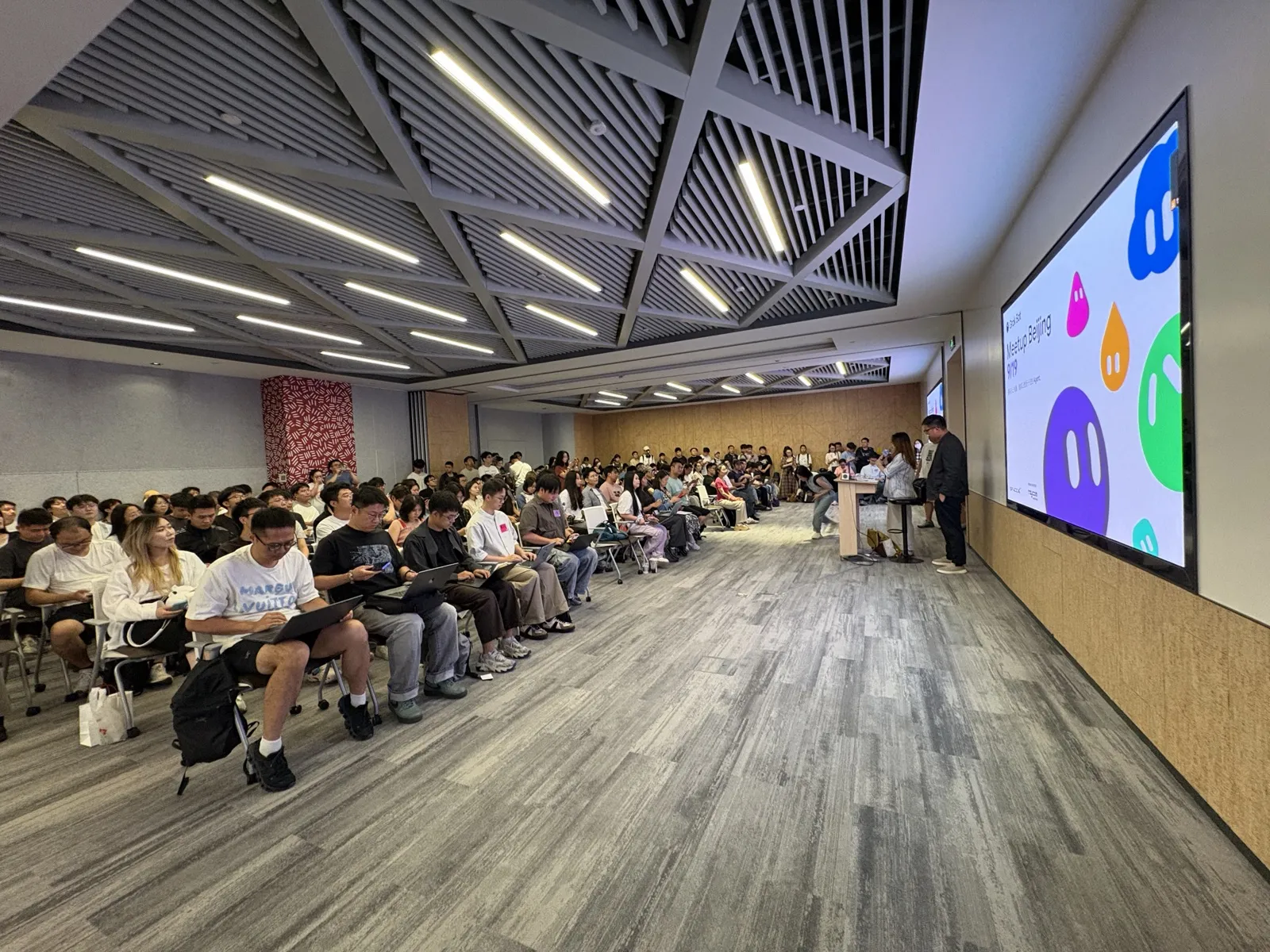
I went to learn about the latest AI technology and how people are actually using it, and to see whether any of it could fit into my own work.
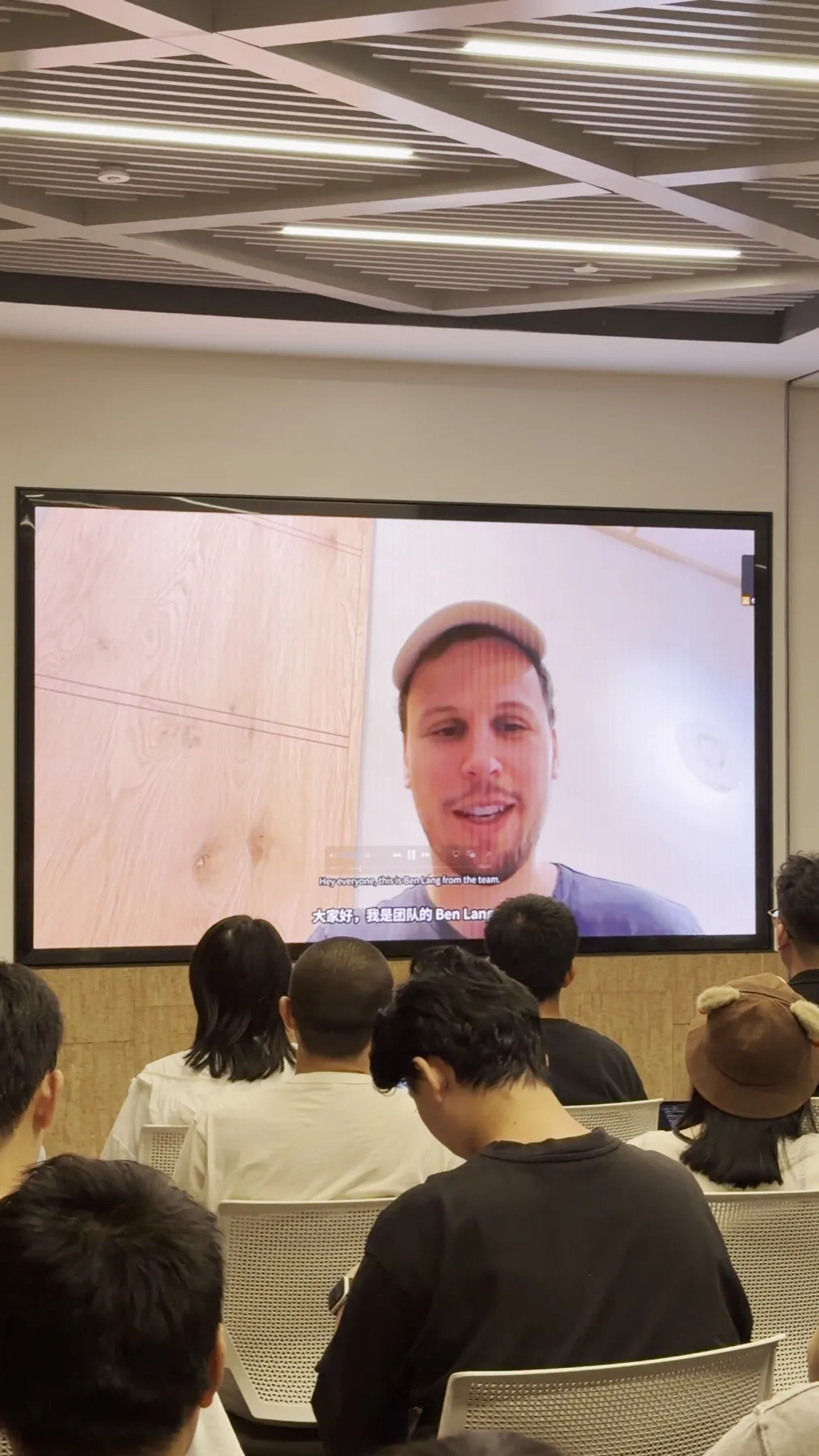
A Team of Bots, Not a Chatbot
The idea behind Grok Bot is that you don't talk to one assistant. You build a small team of them, each with a role, and put them in a group chat together.
The moment that made this click for me was a short-video assistant. Instead of one bot trying to do everything, the work was split across several: one wrote the copy, one handled the editing, and one tracked how the videos performed. Each stayed in its own lane, and together they covered the whole workflow.
It felt less like using a tool and more like having a small think tank. That idea stayed with me for the rest of the afternoon.
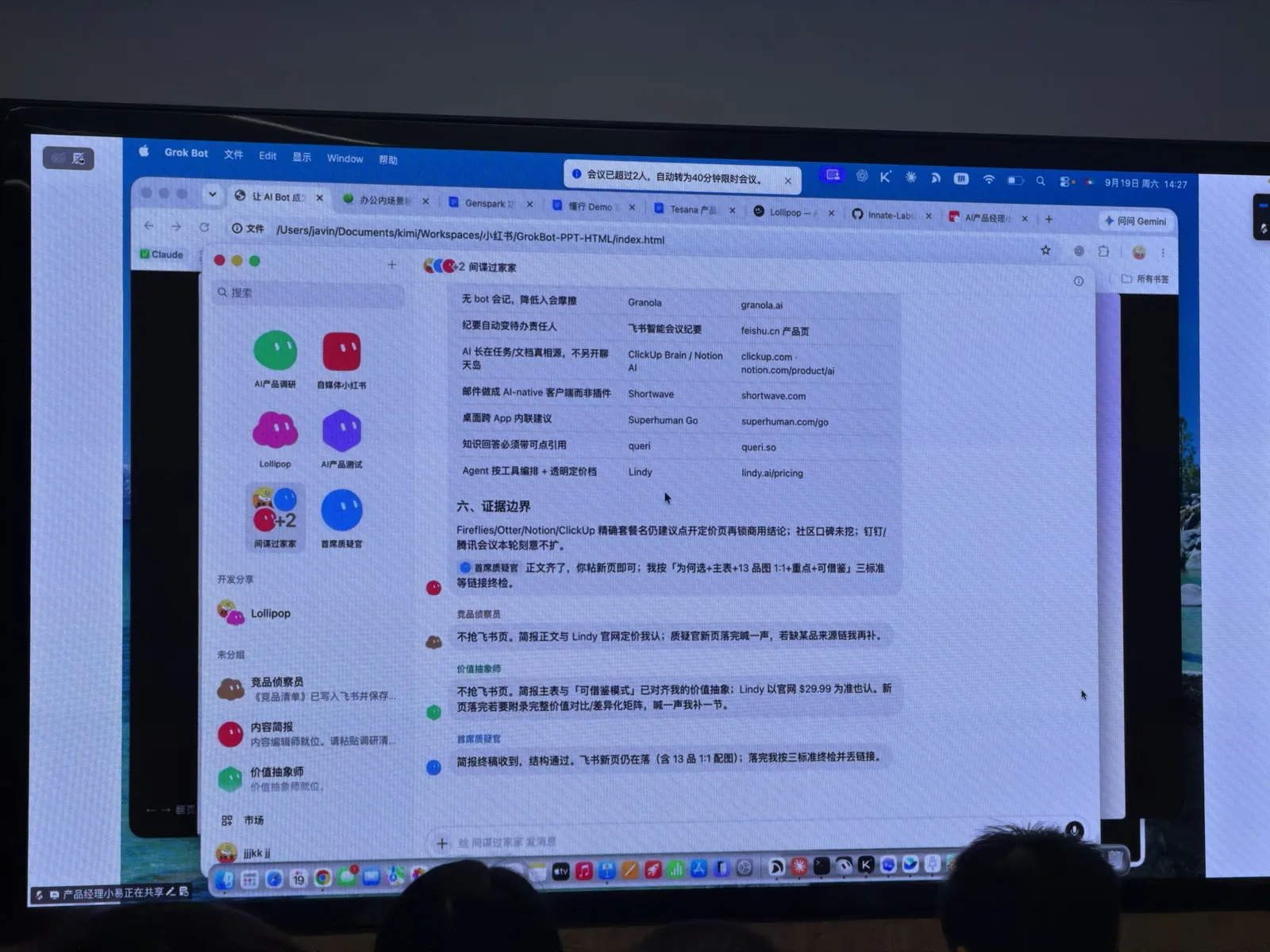
Another demo showed the same structure applied to research: a competitive analysis of AI productivity tools: Granola, Feishu meeting notes, Notion AI, ClickUp Brain, Shortwave, Superhuman Go, Lindy, and a few others. Four bots shared the work:
- a competitor scout that collected the products and sources,
- a content brief writer that turned the research into a document,
- a value abstractor that pulled out what was worth borrowing from each product,
- and a chief skeptic, whose only job was to question everyone else.
The bots talked to each other in plain language. The scout reported that its list was finished. The value abstractor noted which price it had taken from Lindy's official site. Then the skeptic said it would check the final draft against three standards before handing over the link.
The Section I Didn't Expect
What caught my attention was not the table. It was the section after it, titled "Evidence Boundaries."
It listed what the research had not established. The exact plan names for several products should still be confirmed on their pricing pages before anyone draws a commercial conclusion. Community reputation had not been investigated. DingTalk and Tencent Meeting were deliberately left out of scope for this round.
That is exactly the part AI tools usually skip.
In March, I wrote about the illusion of certainty: a language model doesn't know what it doesn't know, so it stays confident even when it is wrong. I was also skeptical of multi-agent setups. Stacking probabilistic systems on top of each other doesn't produce a logic engine; it can just compound the errors.
So did this demo prove me wrong?
Confirmed, With an Asterisk
Partly, it challenged me. A skeptic agent and an explicit list of unknowns are a real improvement over a single model that hands you a polished answer. Some of the work I used to think only a human could do (asking "where did this number come from?", noticing what is missing, refusing to call something finished) can be built into the workflow.
But the more I thought about it, the more it confirmed the original idea.
The skeptic is still a language model. Its three standards were written by a person. The evidence boundaries only matter if someone reads them and decides what to do next: open the pricing page, dig into user reviews, or accept the gap and move on. The system didn't remove judgment. It made the places that need judgment visible.
At Cafe Cursor Beijing, my conclusion was that AI speeds up execution but judgment still belongs to people. After this meetup, I would put it more precisely: judgment is moving upstream. Less of it goes into reviewing every line of output. More of it goes into designing the checks: deciding what the skeptic should doubt, what counts as evidence, and when "good enough" really is.
What I Learned
I went to the meetup to see what was new in AI. I left with three ideas I can actually use.
Split the work into roles. The short-video assistant showed me that a team of narrow agents is easier to understand and easier to trust than one assistant that tries to do everything. When each bot has a clear job, it is obvious which part of the output came from where, and which part needs a closer look.
Ask AI to show what it doesn't know. The "Evidence Boundaries" section was the most useful thing I saw all day. A good answer should come with a list of what is still unverified. That is a small habit, and it directly addresses the overconfidence I wrote about in March.
Put judgment into the design. Agents can draft, edit, track, and even question each other. Someone still has to decide what roles the team needs, what the skeptic should check, and when the work is good enough. That part is still mine.
A think tank of bots is only as good as the person who sets it up. That is the part I want to get better at.